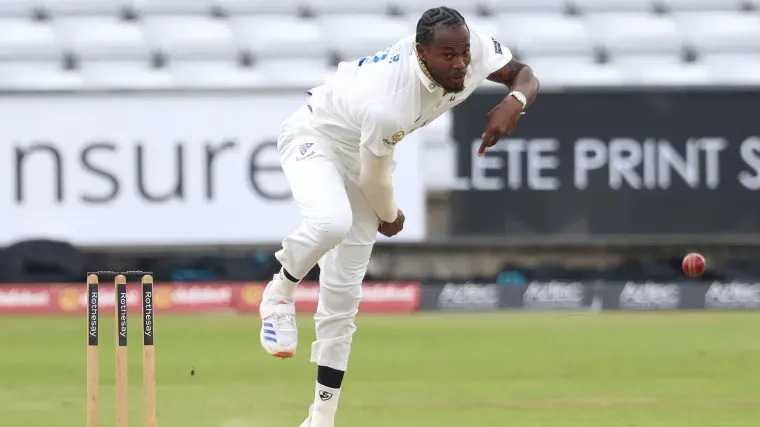
Cricket fastest bowler speed is the kind of phrase that instantly makes every fan sit up straight, because raw pace in cricket isn’t just exciting—it’s intimidating. One thunderbolt delivery can change a match, break a batter’s rhythm, and light up the entire stadium like a festival night.
If you’ve ever watched a fast bowler steaming in with a long run-up, you already know the feeling. The crowd gets louder. The batter taps the crease. The keeper crouches lower. And for a second, everything feels like it’s moving in slow motion—until the ball hits the pitch and rockets through.
That’s the magic of speed. It’s not only about numbers on a screen. It’s about fear, confidence, technique, and the kind of athletic power that very few humans can generate consistently.
In this guide, we’ll explore what “fastest” really means, how speed is recorded, the bowlers who’ve made history, and why pace is more than just a flex—it’s a weapon built with skill, fitness, and smart cricketing brain.
Why Fast Bowling Speed Feels Like Cricket’s Ultimate Superpower
Cricket has many ways to dominate—spin, swing, seam, batting power, fielding brilliance. But pace has a special effect because it attacks time itself.
A batter usually survives by reading the bowler early and reacting quickly. But when the ball is extremely fast, reaction time shrinks. That tiny difference can be the gap between a clean cover drive and an edge to slips.
Fast bowling speed also changes decision-making. Batters stop playing their natural shots. They start protecting themselves. They hesitate. And once hesitation enters the mind, wickets follow.
That’s why the fastest bowlers aren’t just match-winners—they’re momentum-shifters. Even a single fiery over can turn a calm chase into chaos.
What Counts as “Fast” in Cricket?
Fans often ask: what speed is considered fast? The truth is, “fast” depends on the level of cricket and the conditions.
At the professional level, anything above 140 km/h already puts a bowler in the fast category. Above 145 km/h is seriously rapid. When someone touches 150 km/h, it becomes headline-worthy.
But speed alone doesn’t define danger. Some bowlers deliver 145+ and still look manageable because their line, length, and movement aren’t threatening enough. Others bowl 135–140 and feel unplayable because of swing, bounce, and accuracy.
So when we talk about speed, we should also talk about control. The deadliest pacers combine both.
How Speed Is Measured in Modern Cricket
In international cricket today, speed is usually measured using radar technology. It tracks the ball as it leaves the bowler’s hand and calculates the velocity.
That’s why you often see a speed reading on the broadcast right after the ball is delivered. It’s become part of the entertainment. Fans love seeing those numbers flash up like a scoreboard for fast bowling.
However, speed readings can vary slightly depending on the equipment used, camera angles, calibration, and even where the radar is positioned.
That doesn’t mean speed data is fake. It just means that comparing speeds across different eras needs caution. A 150 km/h ball today is clearly fast, but comparing it directly with older generations can be tricky.
Still, the thrill remains the same. Fast is fast—no matter the decade.
Cricket fastest bowler speed: Why the Record Debate Never Ends
The moment someone says “fastest bowler ever,” the debate begins.
Some fans argue it’s all about the highest recorded speed. Others believe the most feared bowler should count more than the number.
That’s why Cricket fastest bowler speed isn’t just a statistic—it’s a conversation starter. It connects fans across generations. One person brings up Shoaib Akhtar. Another remembers Brett Lee. Someone else talks about Jeff Thomson and says, “If he had today’s speed guns, the numbers would be unreal.”
And honestly, they may be right.
The record books show one thing, but the memories of batters and the fear in their interviews often tell another story.
The Legends of Extreme Pace: Names That Defined Speed
Fast bowling history has its own royalty.
Shoaib Akhtar is often called the “Rawalpindi Express” for a reason. He didn’t just bowl fast—he made speed look violent. When he hit 160+ km/h in international cricket, it wasn’t a normal moment. It became a cricket myth that turned into reality on screen.
Brett Lee brought a different vibe. His speed was explosive, but his rhythm looked smooth. That’s what made him special. He could bowl extremely fast and still look in control, like a sprinter who never loses balance.
Shaun Tait was another name fans remember for terrifying pace. He didn’t bowl long spells, but when he did, the ball seemed to fly.
Then there are older icons like Jeff Thomson, who many believe was among the fastest naturally. His action was unique, his bounce was sharp, and batters looked genuinely uncomfortable.
Every era has its pace kings. And each one shaped the way cricket evolved.
Speed vs Swing: Which One Wins More Matches?
Here’s a fun truth: speed gets attention, but swing wins trophies.
Many great fast bowlers weren’t always the fastest. They were the smartest. They knew how to use conditions, reverse swing, and seam movement to make batters guess.
A 150 km/h ball that comes straight might be hit. But a 140 km/h ball that swings late can destroy even the best batter’s technique.
This is why elite fast bowlers don’t chase speed every ball. They mix it up. They surprise. They use slower balls, cutters, and different angles.
The best pacers understand that speed is a tool, not the whole strategy.
Still, when a bowler has both speed and movement, that’s when you get nightmares as a batter.
What Makes a Bowler Bowl Faster? The Real Science Behind It
Fast bowling isn’t just “run fast and throw hard.” It’s a chain of movements working together like a machine.
Speed comes from run-up momentum, strong legs, a stable core, shoulder rotation, wrist snap, and perfect timing. If one part is weak, the whole delivery loses power.
That’s why fast bowlers train like athletes. Sprint work, strength training, mobility, and recovery routines are essential.
Even breathing and rhythm matter. A bowler who rushes the run-up often loses control and wastes energy. A bowler who stays smooth transfers energy into the ball more efficiently.
It’s also why tall bowlers often get extra bounce, while shorter bowlers may generate speed with explosive action and strong core rotation.
There isn’t one “perfect” body type for pace, but there is one requirement: elite athleticism.
Cricket fastest bowler speed and the Role of Fitness
Modern cricket is brutal on fast bowlers. Back-to-back matches, travel, different pitches, different climates—it’s a lot.
That’s why maintaining Cricket fastest bowler speed over a long career is rare. Many bowlers can hit 150 once or twice, but sustaining 145+ consistently requires serious conditioning.
Fast bowlers also face injury risks. Ankles, knees, hamstrings, backs, shoulders—everything is under pressure.
Smart teams manage their pacers carefully. They rotate them. They monitor workloads. They plan recovery.
Because a fast bowler at 90% fitness is not just slower—they’re more likely to get injured again.
And fans sometimes misunderstand this. When a bowler loses speed, it may not be “decline.” It might be smart survival.
The Psychological Power of Speed: Fear Is a Tactic
Fast bowling is mental warfare.
Even the most confident batter feels the difference when the ball comes at them like a bullet. The body reacts naturally—eyes widen, muscles tighten, and the mind becomes cautious.
That’s why bouncers are such a weapon. A short ball at high speed forces batters to defend their body, not just their wicket.
Once a batter starts thinking about safety, their footwork slows down. Their shot selection becomes defensive. Their confidence breaks.
Fast bowlers know this. They use one fiery over to plant doubt, then follow with a fuller ball to take the wicket.
Speed doesn’t just attack technique—it attacks belief.
Why Speed Readings Can Change from Match to Match
Have you ever noticed that a bowler sometimes hits 150 in one match but struggles to touch 145 in another?
That can happen for many reasons.
Pitch conditions matter. A slow pitch reduces bounce and makes the ball feel “heavier.” Weather matters too—humidity, cold air, and wind can affect comfort and rhythm.
Workload matters. A bowler in their first spell might be quicker than in their third spell. Also, match situations affect effort. A bowler may go full speed for a key over, then drop pace slightly to maintain accuracy.
Even the ball itself matters. An older ball behaves differently. Some bowlers push harder with the new ball and focus on swing later.
So speed is not always constant. It’s dynamic, like a player’s form.
The Difference Between “Fastest Ball” and “Fastest Bowler”
This is where many fans get confused.
The fastest ball is a single delivery that hits a peak speed. But the fastest bowler is someone who consistently bowls at high speeds across spells and matches.
A bowler might touch 155 km/h once, but if they usually bowl at 140, they may not be considered among the fastest overall.
Meanwhile, a bowler who regularly bowls 148–152 over many matches might be seen as a true speed machine, even if they never break the absolute record.
So when people talk about speed, it’s worth asking: are we talking about peak speed or sustained speed?
Both are impressive, but sustained speed is the real nightmare for batters.
How Batters Prepare to Face Extreme Pace
Facing fast bowling is a skill built through repetition and courage.
Batters train with throwdowns, bowling machines, and net sessions designed to simulate match pace. But nothing fully prepares you for a real fast bowler in a stadium with pressure and crowd noise.
The best batters rely on early movement and strong fundamentals. They watch the bowler’s hand, pick length quickly, and stay balanced.
They also control their mindset. Panic is the enemy. A batter who stays calm can handle speed better than one who overthinks.
This is why legends like Sachin Tendulkar, Brian Lara, Ricky Ponting, and Virat Kohli have been admired—they didn’t just survive pace, they mastered it.
Speed challenges everyone, but great batters adapt.
The Most Exciting Part of Fast Bowling: The Duel
Cricket is at its best when it becomes personal—in a good way.
A fast bowler running in with aggression. A batter standing tall, refusing to step back. The crowd sensing something special.
This duel is why people love pace. It’s not just about wickets. It’s about dominance, response, and drama.
Even if no wicket falls, a fiery spell can be the highlight of the match. The energy shifts. The game feels alive.
This is also why fans search for speed clips, fastest deliveries, and classic spells again and again. Speed creates memories.
Cricket fastest bowler speed in Today’s Game: Is It Increasing?
Many fans feel bowlers are faster today than ever. In some ways, that’s true. Training methods have improved. Sports science has improved. Nutrition, recovery, and strength programs are far more advanced.
But there’s another side. Teams now value longevity and control. Many coaches prefer bowlers who can bowl 140 with accuracy rather than 150 with injury risk.
Also, T20 cricket has changed tactics. Bowlers use variations more than pure pace. A slower ball at the right moment can be more effective than a 150 km/h rocket.
So while speed still matters, modern fast bowling is more balanced. It’s about pace plus skill.
Still, when a bowler touches the high 150s, it feels special—because it’s rare.
How Fans Can Spot a “Genuinely Fast” Bowler Without a Speed Gun
Even without the speed reading, you can often feel pace.
The ball reaches the keeper quickly. The batter looks rushed. The sound off the pitch is sharper. The pull shot looks mistimed. The defensive shot becomes awkward.
Fast bowling has a visual signature. It looks different. It feels heavier.
Some bowlers don’t even need the speed number to scare you. Their bounce, their skid, and their aggression create the impression of speed.
And that’s the beauty of cricket—sometimes the eye test is as powerful as the data.
Speed Records Are Fun, But Skill Creates Greatness
It’s easy to chase records. It’s harder to build a legacy.
The bowlers we remember most aren’t always the ones with the single fastest ball. They’re the ones who dominated series, won matches, and delivered under pressure.
Speed is the spark, but control is the fire.
A bowler who can aim at the top of off-stump for six balls straight, at 145 km/h, is often more dangerous than someone spraying 150.
That’s why the greatest pacers combine pace with intelligence. They set traps. They read batters. They adjust quickly.
So yes, speed is thrilling. But greatness is complete fast bowling.
What Speed Means for the Future of Cricket
Cricket will always celebrate pace. Fans will always love the fastest delivery clips. Stadiums will always roar when the speed gun shows something crazy.
But the future is also about smarter pace bowling. More variation, better planning, better fitness, and better matchups.
Fast bowlers will continue to evolve. New names will rise. Records may break again. And debates will continue, because cricket fans love arguing about legends.
And every time a bowler charges in and unleashes a rocket, the world will once again search for one thing: Cricket fastest bowler speed.
Read also:
lakers vs houston rockets match player stats
phoenix suns vs memphis grizzlies match player stats
utah jazz vs lakers match player stats
houston rockets vs lakers match player stats